StreetSmart Research · Instruments
The terminal we actually trade from
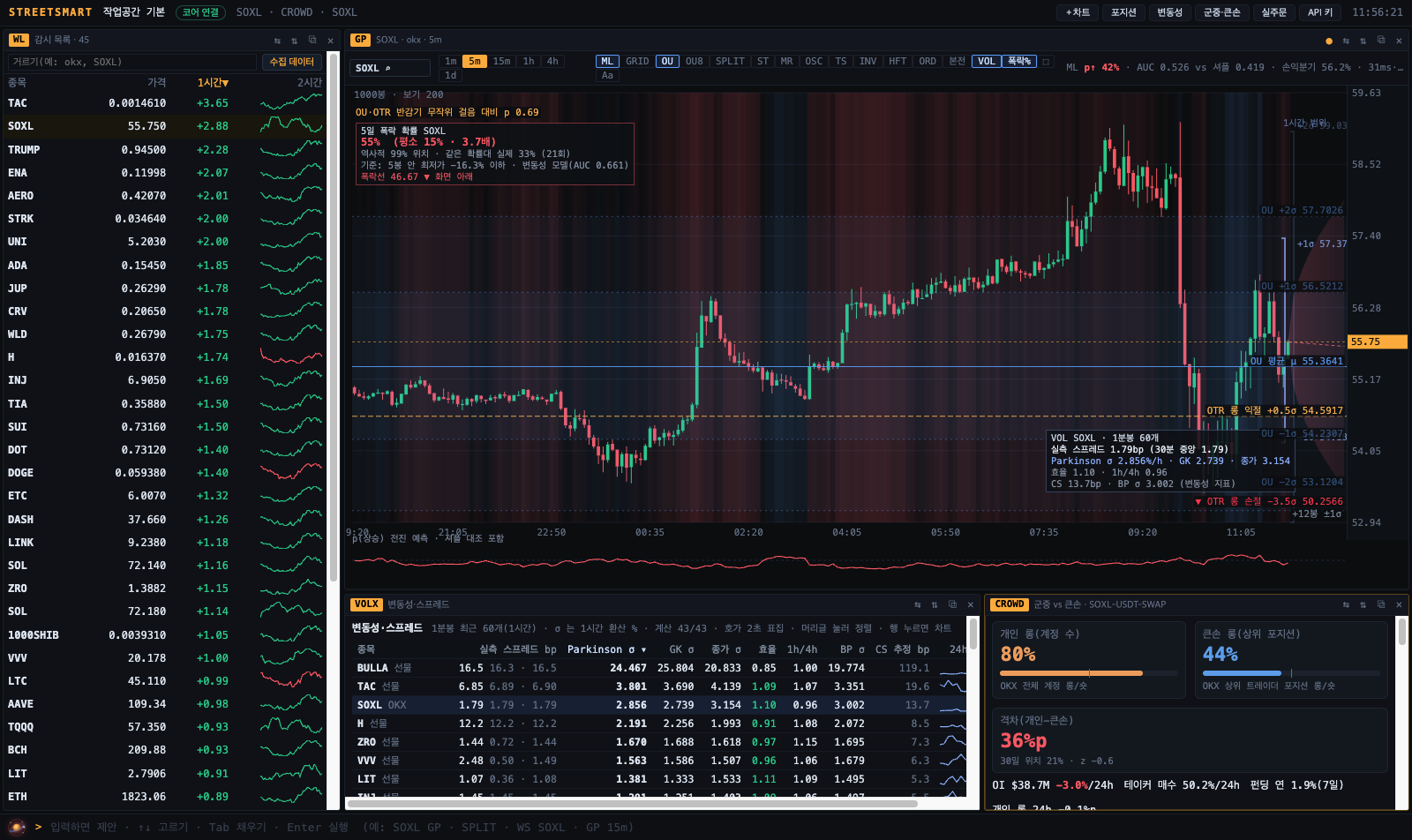
A trading terminal we built for ourselves. The screen and the engine are separate programs, every quote and fill is stored locally, and every algorithm runs on a shadow book before it is allowed near money. The overlays on the chart are the studies in our compendium, turned into instruments.
Architecture
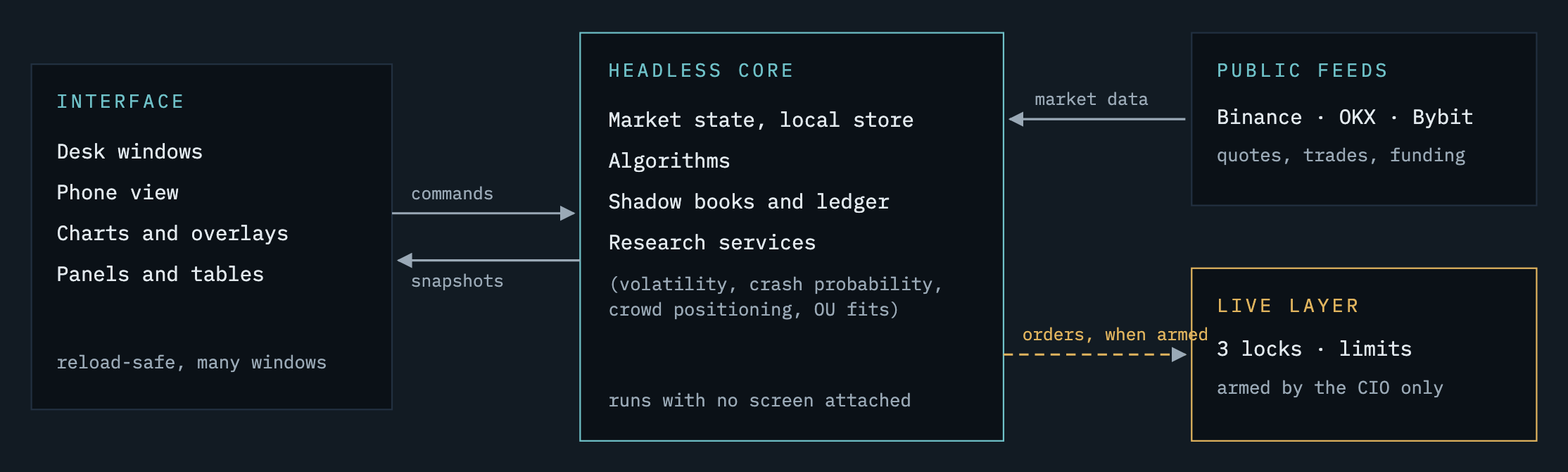
A screen, a core, and three locks
The interface can crash, reload or open a dozen windows without touching the engine. The engine keeps running with no screen at all. Live orders sit behind a separate layer that refuses to act until it is deliberately armed.
Instruments
What is on the screen, and why
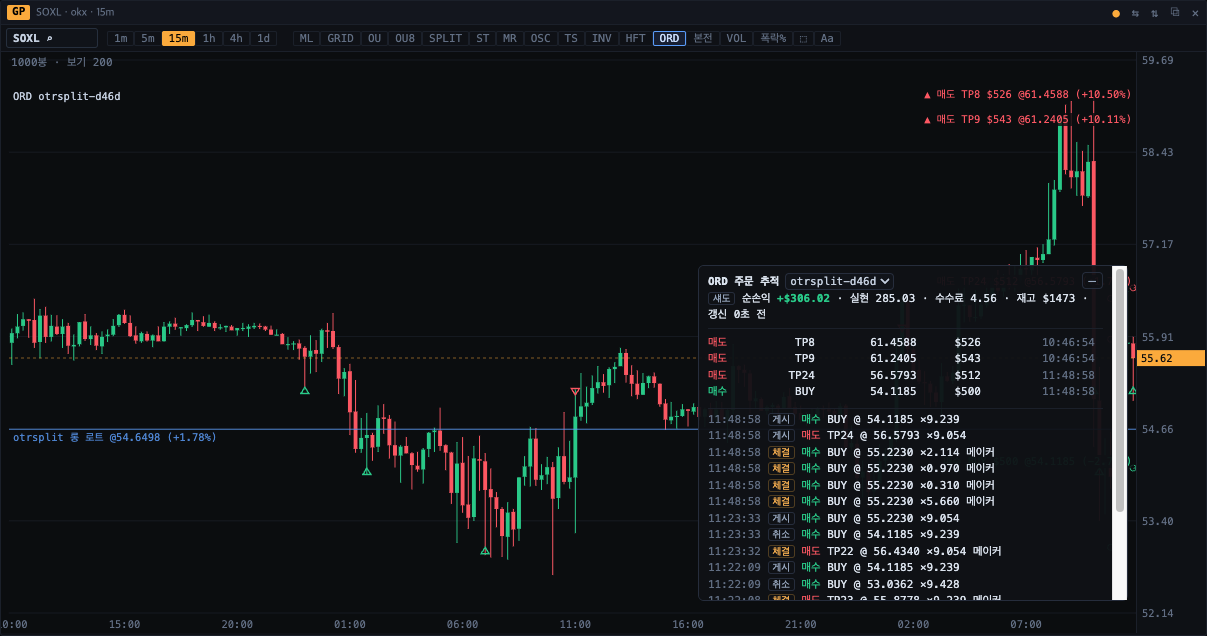
Watch a strategy trade before it trades for real
Any paper strategy can be laid over the chart. Resting orders are dashed lines, fills are triangles (hollow for maker, solid for taker), and the box on the right streams every post, fill and cancel as it happens.
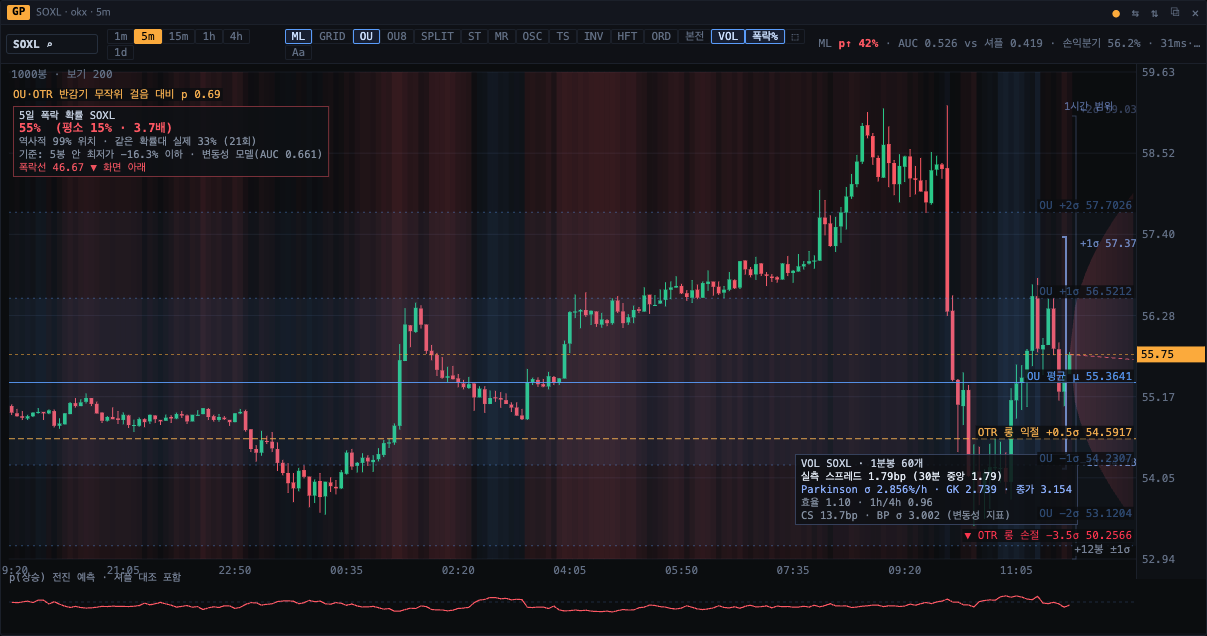
One number we trust, shown next to its track record
The crash box gives the probability of a drawdown in the worst decile within five bars, from volatility alone. Under it, the same model’s historical hit rate at that probability level. The bracket at the right edge is the one-hour range implied by current Parkinson volatility.
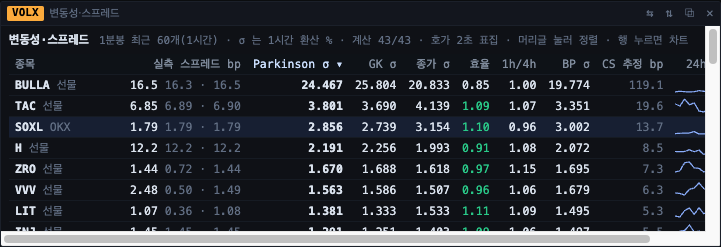
Measured spreads beside the textbook estimators
For every watched symbol: the quoted spread sampled every two seconds, Parkinson, Garman–Klass and close-to-close volatility, and the Corwin–Schultz and Becker–Parkinson estimators from López de Prado’s chapter 19.
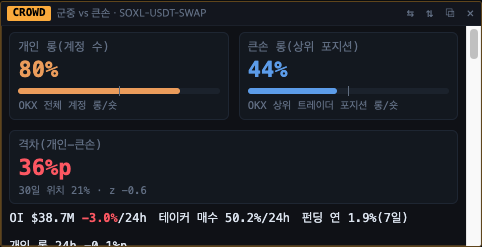
Who is long, and where they would be forced out
Account long share against top-trader position share, open interest by price and flow quadrant, taker imbalance, funding, and an estimated liquidation map built from public exchange data.
Open as many charts as needed, each pinned to its own symbol and timeframe, with a symbol search in every chart.
Given current net exposure, realised profit and loss, fees and funding, the price at which total profit and loss returns to zero.
The same core behind a read-only phone interface: charts, positions, alerts and a single stop-everything button.
Limits
What the terminal will not do
Overlays describe the market. None of them places an order, and the ones without a tested edge say so on screen.
Nothing reaches an exchange until the CIO arms the live layer in person, with order, position and daily-loss limits in force.
Exchange keys are used only for signing. They are never displayed, logged or sent anywhere.
© 2026 StreetSmart Research. Screenshots are from the live terminal with account panels excluded. Paper strategy figures are simulated. Nothing here is investment advice. Privacy

